

I have long posted on studies that try to make sense of how human values differ, and how they have changed over time. A new paper in Social Science Quarterly tries to compare four different proposed values models, by modeling the network of correlations of the variables they see as central. This diagram shows their key result: three clumps of 2-4 named clusters, each of which has 3-10 correlated variables:
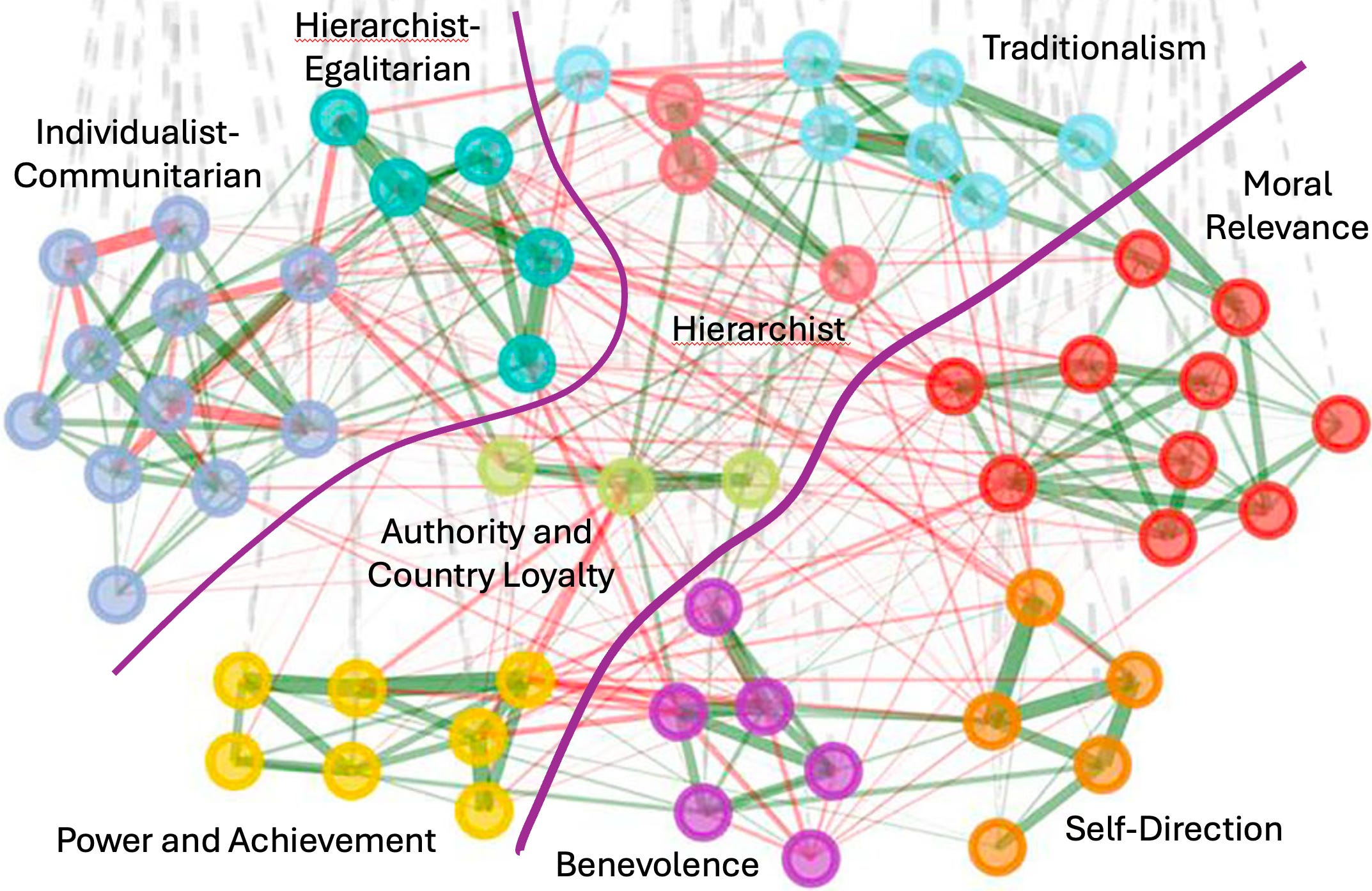
Alas that paper doesn’t give names for the particular variables, and some of the clump names seem overly opaque. But what I can see is still interesting. The bottom of the diagram seem to be items most closely related to status. The lower right clump (called “virtuous agency”) matters most to modern elites, while the middle clump (called “power and social order”) mattered more in the farming era. Did the upper right clump (called “hierarchical individualism”) matter most to foragers, and also matter more now due to a toward-forager modern culture trend?
I’ve suggested that many modern differences are due to moderns seeing themselves as higher status, due to their higher wealth. If so, that virtuous agency would also have mattered more to farming era elites, while the power and social order clump should matter more to non-elites today.
I am very curious about the left clump. What exactly do "individual communitarian" and "hierarchist egalitarian" mean? Do they mean something like what Marx and Lenin promised respectively? That is, "individual communitarian" being the Marxist future of everyone fully being free to pursue his/her self achievements, while "hierarchist egalitarian" being the Leninist future of cadre hierarchy commanding everyone in the system? If so, can we see communism as some sort of atavism, not unlike what Rousseau once fancied?
These are self-reported values based on survey data. It seems likely that these are an exercise by the PR department in order to virtue signal - rather than anything to do with people's actual values as determined by revealed preference theory.